What’s Medical Injection Molding?
“Medical injection molding is the means of manufacturing plastic parts for medical devices using specialised equipment.”
It helps with the creation of specific parts, which in turn allow for uniformity and precision. These parts may be the tiny parts inside large surgical instruments. You know, in healthcare, there is a need for specific standards that these industries support. For example, FDA certification to import into the USA, ISO 13485:2016 for quality verification, and ISO 10993.
So, there is a need for shaped plastic to be melted and poured into molds to create above set standards.
Injection molded medical devices need to perform all their functions without any errors, allowing patients to trust the devices. Making all the components at the same time aids the possibility of the tasks being carried out at the same time, allowing precise scheduling for timely delivery.
The Injection Molding Process
Injection molding may sound like a complex process, but one thing is for certain: it is consistently organised. Here is an easy-to-follow guide that walks you through the steps:
Step 1) Material Loading: As with all instructions, the first step is to load the plastic pellets or granules, which are often medical-grade. The reason these specific plastics are selected is due to their safety and suitability for medical applications.
Step 2) Melting: As with most procedures, the next step is to heat the plastic pellets within the injection molding machine for medical, so that they melt to form a thick liquid. Further, this melted substance now stands ready to be shaped.
Step 3) Injection: This step involves pushing the melted plastic into the mold cavity under high pressure. On this point, the cavity shape is identical to the part that has to be made.
Step 4) Cooling: Now that the molten plastic has been put in the medical device injection mold cavity, it should cool and solidify into the shape of the cavity. With this in mind, the shape should be perfect.
Step 5) Ejection: Finally, after opening the mold, the part should be set to eject. After this is done, further inspection or processing is optional, depending on what the specifications indicate.
Techniques Used in Medical Injection Molding
Different devices require specialized components that aid in the functioning of the injection molding medical devices. To achieve this goal, a variety of injection molding techniques can be used, which provide rigidity, flexibility, or fine details to the components.
Insert Molding
In insert molding, a pre-insert, like a metal piece, is added to the mold cavity before plastic is injected. The flowing molten plastic engulfs the insert and solidifies to partially encapsulate it. This method is dominated by the need to integrally combine metal and plastic into one component. It is often the case in robust and precise medical instruments, like molding Surgical tools with metallic tips.
Overmolding
The prefix indicates the action of additionally manufacturing a layer over another. First, a base is created, and then it is covered with a soft plastic. This process helps to make components of different textures or improve grip. It’s commonly used for handles and grips of medical instruments to enhance the command and comfort of the user during operation.
Micro Injection Molding
Micro medical plastic injection molding is used for creating small and detailed parts. It uses specialized equipment, including tiny molds, which make it possible to create miniature components. Well, these parts can be found in delicate medical injection molding devices, such as hearing aids or microfluidic chips. In addition, this technique is critical for complex medical equipment due to its high precision at even the tiniest scale.
Thin-wall Molding
This technique is useful for producing medical items with a thickness of less than 1mm. It provides both material efficiency and weight reduction, essential for cost-saving, functionality, and the comfort of the patient. For example, the needle hub, caps, plungers, and catheter housings.
Gas-assisted Molding
As the name suggests, this method/technique utilizes pressurized inert gas into a cavity, which pushes the material towards the cavity wall, leaving hollow channels. Some of the common applications include medical device housing, surgical items handles, grips, and crutch components, and medical research items.
Liquid Silicone Rubber (LSR) Molding
Liquid Silicone Rubber (LSR) Molding is a form of rubber moulding characterized by soft, flexible silicone compounds with intricate designs. It is favoured for being long-lasting, elastic, and safe for human contact. In addition, rubber molding is perfect for making seals, tubing, or flexible membranes in medical devices that need to stretch or bend safely without breaking.
Applications of Injection Molding in Medical Devices
Because of the many advantages offered by medical plastic molding, it has been adopted by the medical industry. You will see that this process enables the manufacture of a number of important medical components accurately and dependably. These include: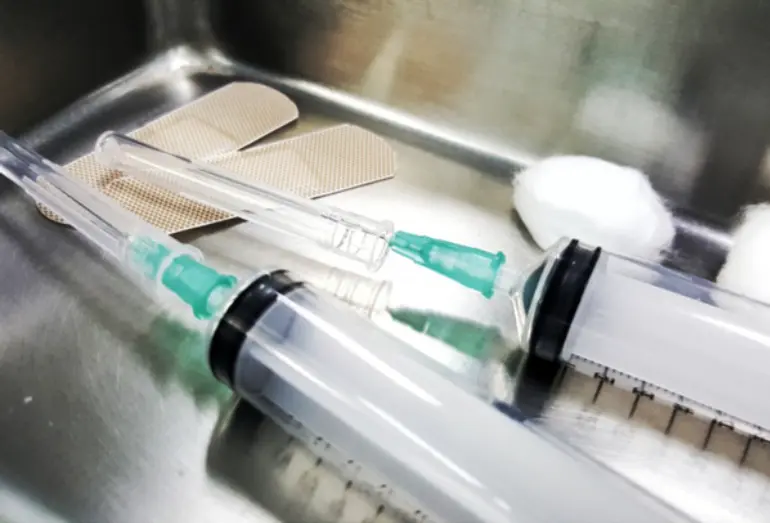
- Surgical Tools: You manufacture handles and intricately detailed medical instruments using injection molding. Their elements need to be cut and shaped accurately, as well as be robust enough to withstand repeated sterilization .
- Parts of medical devices: It forms low-weight but robust plastic medical injection medical parts such as connectors, valves, and housings. You know these require sophisticated shapes.
- Medical product packaging: You make use of injection molding in crafting caps, seals, and containers. Well, such elements ensure medical items are safeguarded against damage, contamination, or degradation while being stored or transported.
- Diagnostic apparatus: Elements of blood analysers, test kits, and imaging machines are made using injection molding for medical devices. These components are designed with a high level of precision to enable accurate testing and result delivery.
- For mass production: Molded pieces are crafted with high precision and in large quantities very quickly. It helps reduce the time spent during production.
Key Materials Used in Medical Injection Molding
The selection of materials for medical parts should be as precise as choosing the correct molding procedure. Molds approved for medical use require durable and safe materials. The following are the most commonly used materials in medical plastic injection molding:
- Polypropylene (PP): In the medical sector, this is one of the most widely used materials. Yes, it is lightweight, flexible, and resistant to chemicals and moisture, making this an excellent choice.
- Polycarbonate (PC): Polycarbonate is great for creating clear and strong polycarbonate parts, for example, syringes, IV connectors, and other medical containers, due to its strength.
- Polyethene (PE): Due to its softness and ease of molding, especially with chemicals, PE is widely utilized in medical tubing and packaging.
- Thermoplastic Elastomers (TPE): TPE is known for soft-touch parts such as grips, seals, and medical tubing. The best thing is that it provides rubber-like flexibility, in addition to plastic strength.
- Polyetheretherketone (PEEK): PEEK is known for its high-strength medical parts. It also offers heat resistance, biocompatibility, and is ideal for implants and surgical tools.
- Acrylonitrile Butadiene Styrene (ABS): When creating handheld instruments and device housings, impact and structurally resistant materials like ABS are ideal.
- Liquid Silicone Rubber (LSR): LSR is soft and flexible with a durable feel, used in the manufacturing of parts like gaskets and seals or parts that touch the skin.
- Medical-grade resins: To ensure proper medical compliance, these resins are tested to guarantee safety and effectiveness for medical use.
Alright! So, proper material selection guarantees that the medical parts required are functional, safe, and effective for day-to-day healthcare solutions.
Benefits of Injection Molding for Medical Devices
Injection molding incorporates smart injection molding techniques for automating the production of medical components. It enables you to accomplish the specific requirements of the medical device manufacturing industry while managing costs, production time, and efficiency. Whether you are developing a single-use syringe or a multifaceted surgical instrument, this approach guarantees the reliability and safety you are looking for. 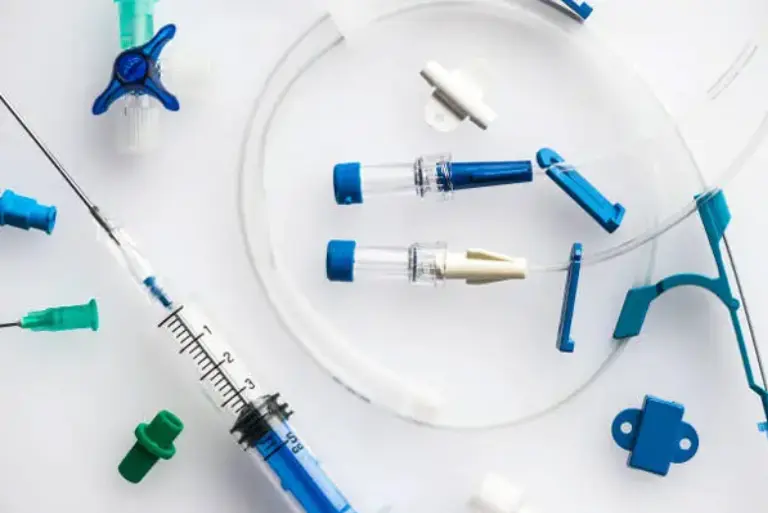
Immediate Accuracy
With medical device molding, you receive extremely precise shapes with exceptionally tight tolerances. Moreover, you will get parts that will mesh perfectly and function exactly in medical equipment. So, it will lower the chance of failure or misalignment.
Quality That Doesn’t Change
It is acknowledged that a certain level of repetition is critical in assuring the safety and dependability of medical equipment. Each part manufactured by medical injection molding will be the same, even if produced in large quantities.
Cost Efficiency for Mass Production
To be straightforward, the mold is the only expensive piece to make. Once it is produced, every additional piece becomes very inexpensive to produce. Si, this is particularly beneficial for high-volume runs of medical device components, as it helps you manage your budget for production satisfactorily.
Scope of Materials
Many types of medical-grade plastics may be employed. So, this helps you adopt the right materials for specific functionalities of each part, whether they need to be flexible, rigid, or even transparent.
Fast Production Time
Setup only takes a short period of time, and the system is streamlined. This allows for quicker production of medical equipment that may be required during critical healthcare periods.
Ability to Mold Complex Parts
Fine and complex detailing can be accurately crafted without hassle. This allows for greater precision with intricate tools, micro features, as well as housings and connectors.
Cleanroom Compatibility
Injection mold can be set up and performed in clean areas. This prevents life-threatening particles such as dust or bacteria from contaminating the parts.
Lightweight but Durable Results
There is no difficulty in removing excess weight added to the device while preserving its strength. This simplicity is what makes it so easy to transport the device in home care, clinics, and even hospitals.
Challenges and Considerations
Alongside the advantages injection molding provides, it brings about notable challenges as well. Highlighting the difficulties can help reduce issues and enable the manufacturing of safer and more reliable medical products. So, consider the following key pointers:
Regulatory Compliance
Those using injection molding technologies must adhere to rigid medical regulations. Yes, each material, process, and end product must be FDA approved or tailored to other equivalent worldwide standards, regarding safety, hygiene, and functionality.
Material Selection
Making use of the correct plastic is very important. The material must possess biocompatibility, non-toxicity, and must be capable of sterilization without weakening or degrading its structural integrity.
Cleanroom Requirements
As we discussed before, some medical components are required to be manufactured within sterile environments. Here is the thing that the setup and upkeep of cleanrooms may be expensive, requiring management, ongoing inspections, and regular maintenance.
High Upfront Tooling Costs
Production of the mold is quite expensive. While high-volume production models recover cost over time, the initial expense presents a problem for low-volume and custom designs.
Quality Assurance
You need to implement continuous oversight and evaluation for the processes undertaken; even minor imperfections in medical components pose a significant danger and may result in recalls.
Supply Chain Reliability
Availability of resources for medical production should always be consistent. Yes, you know, delays, supply, or logistical issues can impact timelines for executing production and fulfilling deliveries.
Recognizing these issues, strategies allow you to improve the quality, safety, and durability of resources in medical molding.
Cleanroom Standards and Sterilization Methods
Regarding manufacturing medical parts, maintenance is important to avoid contamination. So, by keeping this in mind, medical injection molding is often done inside cleanrooms, which are meant to control contamination. They are spaces where the air and surfaces are free of dust, microorganisms, and any other materials that can pose a danger to patients.
In cleanrooms, the level of cleanliness is determined by the degree of purity of the air in the facility. For instance, ISO Class 7 or Class 8 cleanrooms serve the purpose within the medical industry. Such rooms are provided with HEPA filters, specific dress for employees, and a continuous inflow of air to help achieve a sterile environment.
Lastly, there is another sterilization step in the process. Medical-grade parts require a secondary process known as sterilization after molding into shape or cutting to ensure the part is safe for medical use. Based on the type of material and product, different methods can be used.
Some of the most popular sterilization methods are:
- Ethylene Oxide (EtO): A gas which is effective at low temperatures; suitable for delicate materials.
- Gamma Radiation: Deactivates harmful microbes by means of high-energy rays; useful for countless medical items.
- Steam (Autoclave): Inflicts heat and pressure; perfect for rigid plastics.
Guarding the sterility of medical components not only ensures the comfort and well-being of patients but also ensures that the parts meet various medical safety regulations across the globe.
Choosing the Right Manufacturing Partner
Identifying the wrong medical injection molding partner can prove costly in the overall production life cycle. Therefore, selecting the right reliable partner is necessary, which can lessen many issues. So, if you are really looking for a trustworthy manufacturer, then FSproto can be the first choice. Here are some notable points about FSproto.
- Certified for Medical Manufacturing: Our certificates rea an example of how we can help meet multiple international standards like ISO 13485, ISO 9001:2015, and ISO 14001:2015. We guarantee that we can assist with medical parts to the needed standards, quality, and attention to detail.
- Aiding in Material Selection: Can’t choose which type of plastic to use? No problem. We have an extensive inventory of medical-grade plastics and can assist you in choosing the proper plastic for your product’s function, safety, and sterilization requirements.
- Flexible Production Capability: From a handful to thousands of custom parts, we can do it all. With our modern equipment and skilled personnel, you can expect both small batch and high volume production to be completed with exceptional quality.
- Simplicity and Efficiency at Its Best: Our platform allows you to upload your design, generate quotes, provide DFM (Design for Manufacturing) feedback, and monitor progress. With our advanced injection molding machines for medical components, it’s straightforward and fast, which helps you manage your project better.
When you collaborate with an injection molding expert like FSproto, you are free from any hassle of design and delivery. We also provide custom injection molding services. So, with your upcoming medical project, let us help you execute it with precision, speed, and most importantly, confidence.
 Susie Huang
Published Date: 2026/1/8
Susie Huang
Published Date: 2026/1/8